Ciao a
tutti!! I am so honored and excited to introduce you to Melissa Muller Daka,
Chef-Proprietor of the wonderful Sicilian restaurant Eolo in New York City. I was lucky enough to meet Melissa at a
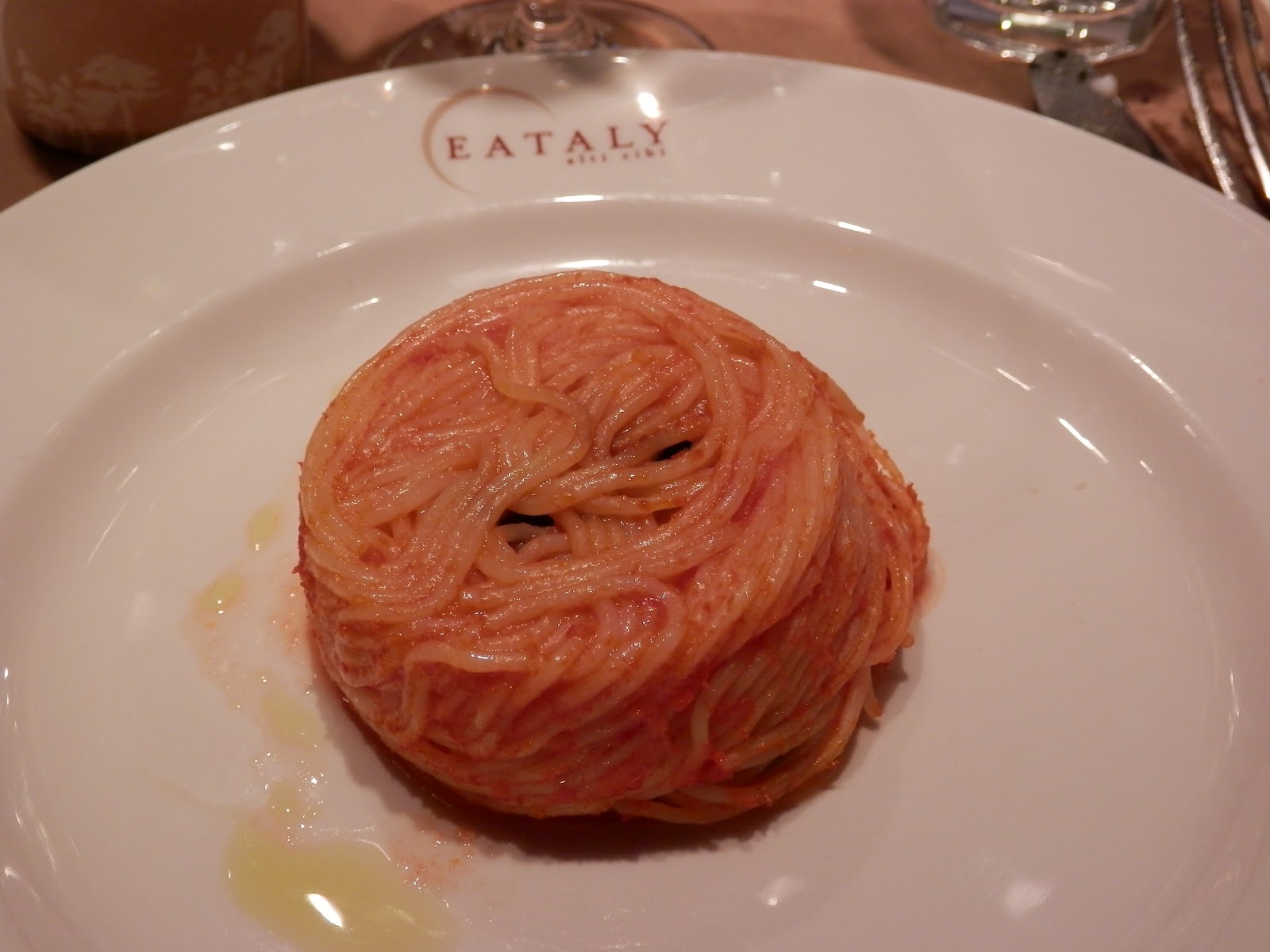
luncheon held at Eataly for Planeta Wines and she was gracious as to answer
some of my questions. Enjoy!

Your menu is
centered on Sicilian cuisine. For those that might not know the difference,
what makes Sicilian food different then other regions of Italy?
Sicily is the largest island in the
Mediterranean Sea, with over five million inhabitants, and is divided into nine
provinces: Palermo, Trapani, Agrigento, Caltanissetta, Enna, Catania, Messina,
Ragusa and Siracusa. Within the provinces, every city and town has their own
traditional set of recipes. Iconic Sicilian dishes, such as caponata and pasta
with sardines, vary in preparation from village to village.
From the beginning, Sicily has been a cultural crossroads, inhabited by the Greeks, Phoenicians, Arabs, Romans, Jews, Normans, Bourbons and beyond. Sicilian food has kept several techniques, recipes and ingredients from each ethnic group and incorporated them into its own. In any given dish, foods first introduced to Sicily during the Greek and Arabic periods might accompany other ingredients of New World origin, making the cuisine a reflection of the island’s history and its many ethnic inhabiters.
Certain themes can indeed be identified to provide a universal description of Sicilian food. Rolled meat and seafood dishes, known as involtini, are prevalent in the island’s cuisine. Also, dishes that are flavored with agrodolce, a mixture of vinegar and sugar, are also common because vinegar is used to preserve food. In English, this typical Sicilian taste is often referred to as sweet and sour, but agrocolce is actually more sour than sweet. Sometimes, agrodolce, is added to dishes that contain tomato sauce, such as eggplant caponata, while other times it is used to flavor fried vegetables or meat and seafood dishes.
Seafood is found in all forms in the coastal areas of Sicily. Anchovies and sardines are preserved in salt and used in pasta dishes and in antipasti. Tuna is also preserved in olive oil and its eggs are fermented into a delicacy known as bottarga. Swordfish, octopus, squid, shrimp, mullet, branzino, sea urchin, clams and mussels are among some of the other fruits of the Mediterranean Sea found on the Sicilian table.
Other characteristic elements of Sicilian food include the use of both cultivated and wild herbs and the use of nuts, such as pine nuts, almonds, pistachios and hazelnuts, which are used in savory and sweet dishes alike. Also, olive trees are cultivated in abundance in Sicily, making olive oil the fat of choice in cooking. Butter and cream, which are used in some Northern Italian cuisines, are rarely part of Sicilian cooking. Citrus fruits are a staple of the island. Lemons, oranges, citrons and mandarins are not only eaten when in season, but are preserved in liquors and made into sorbets. Finally, cheese is used in abundance, and even paired with seafood, which is considered taboo in most other regions of Italy. Cheese-making has existed in Sicily since the time of the Greeks and is still prevalent today. Ricotta, a by-product of cheese, is also used in both sweet and savory dishes.
A good portion of the Sicilian recipes that Americans are familiar with are peasant dishes, which were first introduced by Sicilian immigrants over a century ago. But Sicily also possesses a legacy of opulent aristocratic cuisine, which was elaborate and ornate in taste and presentation. Interestingly, some popular peasant foods, such as sardines prepared in the beccafico style, are copies of dishes once prepared in kitchens of aristocratic families. That sardine dish in particular, was once prepared with little birds, known as beccafici, but since the recipe was costly to prepare, peasants re-created it with sardines, flipping up the bottom of the fish tail to resemble the tail of the bird. Additionally, there is a fascinating array of nut and ricotta-based sweet recipes that were passed down for centuries in the cloistered convents, which once dotted the island’s landscape. Until today, many of the elaborate sweets that originated in these convents are coveted and considered secret recipes. Therefore, I strongly disagree with the many food writers who describe Sicilian food as “simple.” Indeed, many classic dishes are straightforward and prepared with no more than two or three ingredients, but others are complicated (just look at the ornate cassata cake as one example) and require a great deal of time to prepare with skill.
A lot of people love Italian food, as a matter
of fact, you have to look hard to find people who don’t like it, what do you
think it is about Italian food that makes people enjoy it so much and brings
everyone together?
I think the answer to that question
can vary. There are an abundance of Italian-Americans in the United States,
many of whom are descendants of immigrants who came here during the Mass Wave
of Immigration in the late nineteenth century and into the twentieth century.
For those of us who grew up in Italian households, patronizing an Italian
restaurant might be a way to taste flavors that spark memories from our
childhoods. I can surely attest that a good portion of my customers here at
Eolo are in search of dishes that their Sicilian grandmothers once prepared for
them.
For those who are not of Italian descent, many Americans have travelled to Italy, and eat in Italian restaurants because they are familiar with the cuisine. But the abundant popularity of Italian foods around the country has made the cuisine popular even to those who have no connection or who have never travelled to Italy.
Italian food is full of carbs and is filling. Rarely does one leave an Italian restaurant with an empty stomach. Finally, our cuisine also pairs well with red wine. All in all, the pastas, breads, herbs, flavors and cheeses of Italy are comforting; when prepared well, it is food that makes not only your stomach, but your heart and mind feel at home.
When I was little
I loved playing with fake food and would set up a fake restaurant and I always
enjoyed going to fancy restaurants with my parents. Were there any signs like
that that you knew you were meant to be a chef?
By
the time I was four, I was a regular sous-chef in my mother Josephine’s
kitchen. The spark that ignited my love of food was
kindled in the kitchens of my Sicilian cousins’ homes as a child and
subsequently in my mother’s New Jersey kitchen where we recreated authentic
Sicilian flavors. I had a “restaurant”
in my backyard clubhouse named Melissa’s Place. I still have a copy of the menu
I typed up when I was about ten-years-old. I used to invite kids from the
neighborhood to stop in for a bite. Rather than serve fake food, I prepared salads from foraged dandelions and made other
improvised dishes with vegetables picked from my mother’s garden.
What is your
signature dish and could you please share the recipe with us?
That’s difficult. Because I don’t
actually have one signature dish. However, many people ask me for the recipe
for the ricotta doughnuts that I serve for dessert at Eolo. My grandmother,
Frances, taught me this recipe, and she learned it from her mother.
As for the history of sfinci, a 19th century Sicilian historian, Michele Amari, claimed that sfinci were first introduced to Sicily by the Arabs in the 10th century. On the other hand, Sicilian culinary historian, Pino Correnti, purports that sfinci are derived from a type of sweet that the ancient pagan inhabitants of the island made to welcome the arrival of the winter solstice. In either scenario, the sfinci have been a part of Sicilian cuisine for centuries.Today, in Sicily, sfinci are often made in the spring, when the ricotta is fresh. They are a common staple sweet for the Feast of Saint Joseph (“San Giuseppe” in Italian), which is celebrated on March 19th.
At Eolo, I stuff the sfinci with an orange pastry cream and make a chocolate-Kahlua sauce to dip the warm fritters in.
RECIPE FOR SFINCI

Sfinci Batter
For
1 1/2 quarts of batter
6 Eggs
1 teaspoons vanilla
1/2 Cup Sugar
1 1/2 lbs. Ricotta
1 Pint + 1/8 Cup AP Flour
1 Tablespoon +1 teaspoon baking powder
Steps:
1. In a kitchen aid, paddle eggs, vanilla and sugar for 5 minutes on medium
2. Add Ricotta and paddle until incorporated.
3. Add Flour and baking powder and mix just until incorporated. Make sure not to over-beat.
Orange-Vanilla Pastry Cream
Single
Order:
1 Quart Milk
227 Grams Sugar
71 Grams Cornstarch
15 Egg Yolks
1 Vanilla Bean
Orange
Extract to Taste
Steps:
1. Bring Milk
to simmer in a large, tall heavy bottom stainless teel pot.
2. Whisk
together sugar, cornstarch, and yolks to smooth.
3. Temper egg
mixture and return to pot.
4. Stir
constantly until bubbles appear. Turn down heat and cook for 5 minutes.
5. When thick,
pour into a hotel pan and cover with plastic wrap immediately.
Warm Kahlua & Chocolate
Sauce
Ingredients:
1 Quart Half and Half
3
Cups Sugar
120 Grams Butter
5
lbs. 66% Chocolate
1
Cup Kahlua
2
teas. Vanilla Extract
Steps:
1. Bring half
and half, sugar and butter to a simmer
2. Add
chocolate and stir until dissolved.
3. Off heat,
add Kahlua and vanilla extract.
4. Mix well.
I saw that you
offer gluten free pasta choices on your menu which is a fantastic for those
with gluten allergies. A lot of Italian food centers around pasta, risotto,
bread and pizza, what inspired you to add this feature to your menu?
My restaurants are
gluten-free-friendly, meaning that I make sure to train my kitchen and wait
staff about gluten (and other) allergies, and take measures to ensure that
those who cannot eat gluten can safely dine in my establishments. Nearly one
year ago, I myself discovered that my body cannot tolerate eating gluten. More
and more customers lately are also getting the same diagnosis from their
doctors. I understand first-hand how important it is to offer dishes that are
wheat-free. While I can taste foods that contain gluten while cooking, I surely
cannot eat a whole bowl of pasta anymore. For someone who was used to eating a
serving of penne at lunch everyday, I’ve had to adapt to gluten-free pasta. As
opposed to popular belief, I must admit that there are some really good
gluten-free pasta brands on the market. I especially enjoy the penne from
Bionaturae. I’ve also adapted several meat and seafood dishes, removing the
gluten from the recipes.
At Eolo, all of our pasta sauces are available with gluten-free penne or spaghetti and we make a point to cook the pasta in separate water so it is not contaminated from the semolina flour used in our regular house-made pasta. At Pastai, my new pasta bar (scheduled to open in late January), I will offer house-made gluten-free pasta options as well. I’m hard at work now developing my own recipe with a combination of brown rice flour and potato starch. The pasta will be made on a machine dedicated to gluten-free pastas.
Food can
transport me to another time and make me remember something wonderful. I am
always talking about my Nonna’s fried cauliflower and what beautiful memories I
have of her making it for me. What are some of your favorite food memories?
My childhood summers spent in
Sant’Anna, a small village in the province of Agrigento, revolved around food.
In fact, the majority of social activities involved cooking or preserving food.
I helped my cousins bottle tomato sauce and prepare marmalade with the summer
fruits. After food preparations, we would bathe in the mineral-rich spring
water gebbia, or pool, on my cousins’ farmland. Around the concrete structure,
arid calcium-rich soil baked in the summer sun. The scirocco, or hot winds from
Africa, caused the olive leaves to rustle in the wind, sounding much like the
hissing sounds that snakes make. After bathing, we walked around the property
and picked leftover winter citrus fruits from the trees and then stayed in the
country until dark, baking anchovy-laced pizzas in wood-burning ovens for the
entire family to enjoy.
In the evenings, I spent time with my friends from the town. Some nights we strolled up and down the piazza, stopping every so often for a cone of creamy gelato or a pastry. Other nights, we drove down to the beach and ate mussels, sea urchin and fresh-caught octopus, boiled and drizzled with lemon juice. Every year, on August 15th, for the festival of the Assumption of Mother Mary - a national holiday called Ferragosto in Italy - we setup tents on the beach and ignited bonfires, on which we grilled marinated lamb chops, fennel-ridden sausage and chicken segments. I’m currently writing a cookbook about Sicilian cuisine, which will include many more stories about such food memories, along with recipes.
Are any of the
recipes from your restaurant family recipes? And if so, who are they
from?
Sfinci
(ricotta doughnuts) from my grandmother
Manicotti
from my grandmother
Pasta
with Sardines from my cousin Maria in Sicily
Pasta
al Forno - also from my cousin Maria in Sicily
What's a favorite
meal that you might cook for yourself on quiet evening at home?
Owning a restaurant, writing a book
and working seven days a week, the reality is that there is no such thing as a
quiet evening at home. I do, however, cook for my husband and me in the
restaurant kitchen. I often use whatever seasonal produce I have on hand from
the farmer who supplies Eolo and make vegetable medleys. We eat very healthy
food that nourishes the body and soul, avoiding foods with GMOs, pesticides,
refined sugar, conventional meat and dairy.
Eolo is Italian
for Aeolus, the ruler of the wind, what's the significance behind that name for
you?
This
is what I recently posted to the home page of Eolo’s website about the
significance of the name Eolo:
Beyond the mythological tale of Aeolus, I chose to name my Sicilian restaurant after the ruler of the wind when brainstorming about my sensory memories of childhood summers spent in Sicily. The first thoughts that came to mind were about the scorching sun, the shooting stars of mid-August, the taste of the salt when swimming in the Mediterranean Sea, and especially the wind, which carries the hot scirocco breeze from Africa in those warmer months. That wind used to visit me in my room like a long-awaited visitor during the desert-like hot summers. After devouring our daily mid-day pranzo of pasta, meat, salad, fruit, and dessert, I often followed the custom of retiring to bed for a nap before heading off to the beach or countryside. The sweet warm breeze carried the scents of bread baking at the nearby panificio, dried grass being burned to fertilize the soil, and garlic and herbs from my neighbors’ kitchens. All of these smells arrived at my balcony window with the help of my imaginary friend, Eolo.